EV Charger Installation Singapore

Three years ago, EV charger installation in Singapore was something only landed-house owners asked about. Today, it is one of the most common jobs we do. Condo MCSTs are approving wallboxes. HDB is rolling out EV-ready parking. SP Services has a streamlined 3-phase application process. The whole thing has become routine — and that is a good thing, because a properly installed EV charger is the single biggest quality-of-life upgrade an EV owner can make.

If you are searching for EV charger installation in Singapore, you have probably already picked the car, or you are very close. The remaining questions are all the same: which charger, where to mount it, do I need SP approval, will my DB handle the extra load, and how much will it cost.

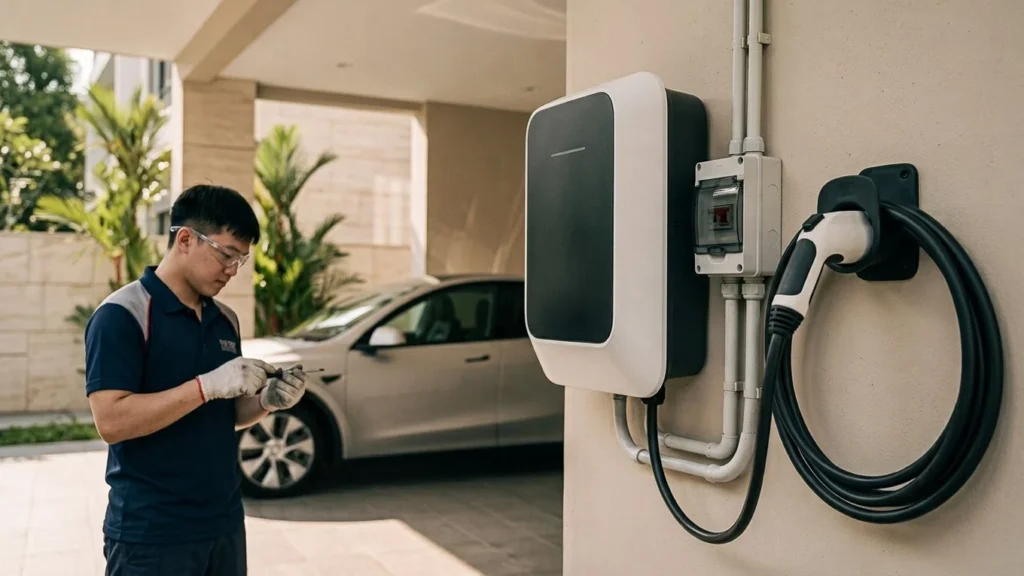
TRUST ELECTRICIANS handles EV charger installation across Singapore — landed, condo, HDB, and commercial. We do the dedicated circuit, the RCBO, the cable run, the wallbox mounting, and the LEW-signed paperwork. We work with the major charger brands (Wallbox, Schneider, ABB, Hyundai, BYD) and with your MCST or HDB for the approval paperwork.

✅ BCA Registered ✅ LEW-Certified ✅ EMA-Compliant ✅ Landed / Condo / HDB / Commercial ✅ SP Services Application Support ✅ All Major Charger Brands

Home EV Charger Installation (Landed / Condo)

For landed houses, the install is straightforward. For condos, there is an approval step first.

Landed House

A typical landed-house EV charger install takes 3–6 hours and includes:

  1. Site survey and load calculation — we confirm your existing single-phase or 3-phase supply can handle the additional 7 kW (single-phase) or 11–22 kW (3-phase) load, and we check the routing from the DB to the carport or garage.
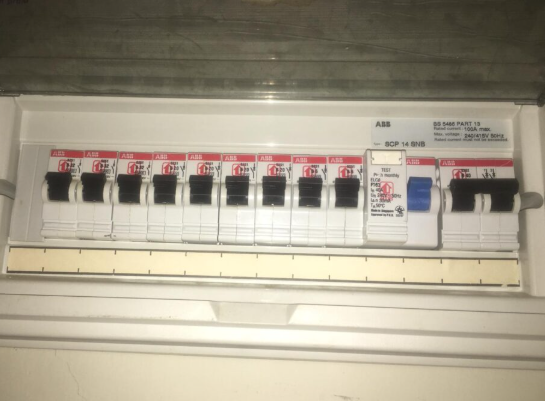
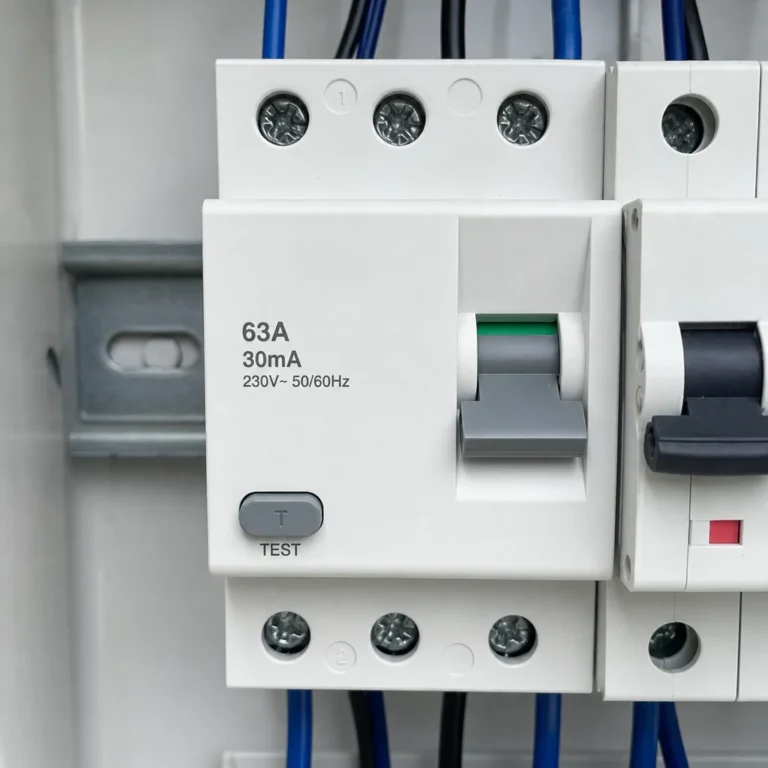
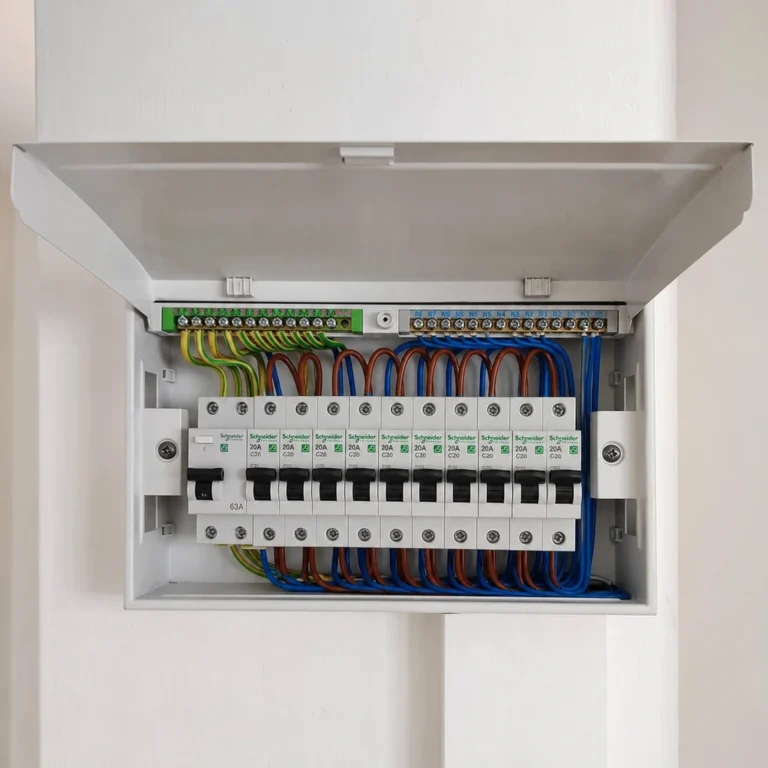
  2. Dedicated circuit from the DB — a new MCB (typically 32A or 40A) and a 30mA RCBO, properly rated for continuous load (EV chargers draw for hours, which is more thermally demanding than a kettle).
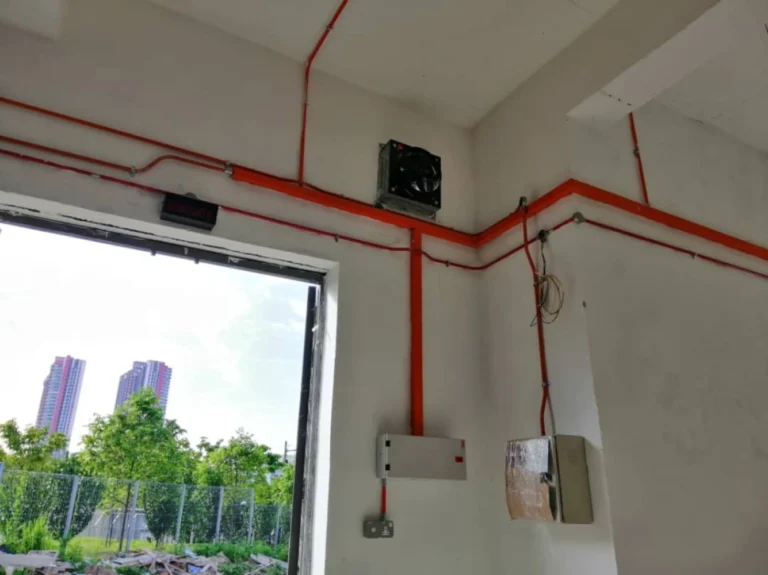
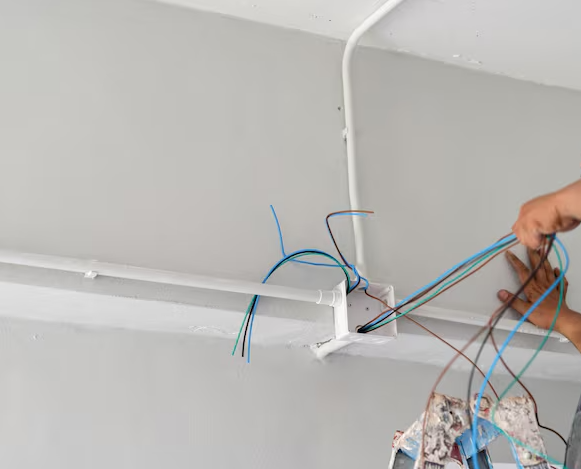
  3. Cable run — 6 mm² or 10 mm² cable, depending on distance and load, run in surface trunking, conduit, or underground ducting. The cable routing is the part that varies the most from house to house.
  4. Wallbox mounting and termination — we mount the wallbox at the agreed location, terminate the cable, set the charger current, and test.
  5. LEW sign-off + CoC — the dedicated circuit requires a LEW endorsement and a Certificate of Compliance. We issue this as part of the same visit.

Condominium

The same electrical work applies, but there is an MCST approval step first. Most Singapore condo MCSTs now have a standard EV charger installation policy — they require you to submit the charger model, the installer’s credentials, the cable routing plan, and a LEW endorsement before approval.

We help with the MCST submission — the paperwork is straightforward once you have the right installer and the right charger. Lead time for MCST approval varies from a few days to a few weeks, depending on the management council’s meeting schedule.

For more on the condo side, see our Commercial Electrician Singapore page — the MCST and approval flow is the same.

"Over 2500+ Water Heater Safely Install & Replace Across Singapore"

⭐⭐⭐⭐⭐ 4.9/5 Google Rating

HDB & Condo EV Charger Approval Process

Let me walk you through the typical approval flow, because it is the part most people underestimate.

Step 1 — Check your eligibility.

  • HDB: HDB has been progressively expanding EV charger provisions in HDB car parks. As of 2025, most new BTOs are delivered EV-ready, and many existing HDB car parks are being retrofitted. If your HDB car park does not yet have EV provisions, you may need to wait for the HDB rollout to reach your block, or apply for an individual case.
  • Condo: Almost all condos allow private EV charger installation now, subject to MCST approval. The MCST will specify the approved charger models, the installation contractor requirements, and the cable routing rules.

Step 2 — Submit your application.

  • For condos, this is the MCST submission with the charger specs, installer credentials, and cable routing plan.
  • For HDB, this is the HDB EV charger application via the HDB MyParking app or the relevant HDB branch.

Step 3 — Install the charger.

  • Once approved, we do the install in a single visit, typically 3–6 hours for a landed or condo, longer for an HDB car park (which involves longer cable runs and more coordination with the HDB car park operator).

Step 4 — LEW sign-off + CoC.

  • We issue the LEW endorsement and CoC for the dedicated circuit, and you submit this back to HDB or your MCST for their records.

EV Charger Installation Cost

The charger itself is the biggest cost driver. The installation work is comparable across most landed houses, and scales up for condo / HDB car park work because of the longer cable runs and the approval coordination.

For full current rates, see our Electrical Services Price List Singapore page. As a rough guide:

  • Landed house, single-phase, short cable run (< 15 m): typical ballpark for install work only, excluding the charger. The charger itself (e.g. a 7 kW Wallbox Pulsar Plus) is sold separately.
  • Landed house, 3-phase, longer run or underground ducting: higher — depends on cable length, routing complexity, and whether trenching is needed.
  • Condo or HDB car park: higher again, because of the longer cable run, the MCST / HDB coordination, and the additional LEW paperwork.

We will give you a fixed written quote after the site survey, before any work begins. The quote lists the charger (if supplied by us), the cable, the conduit / trunking, the DB-side work (MCB, RCBO), the labour, and the CoC separately, so you can see exactly what you are paying for.

Single-Phase vs 3-Phase EV Charging

Both work, and the right answer depends on your car, your home, and your driving pattern.

  • Single-phase 7 kW — the standard for most Singapore home installs. Adds roughly 40–50 km of range per hour of charge. Fully charges a typical EV (e.g. BYD Atto 3, Hyundai Ioniq 5) overnight.
  • 3-phase 11 kW — for homes with 3-phase supply. Adds roughly 60–75 km of range per hour. Useful if you have a larger battery, two EVs, or a higher daily driving pattern.
  • 3-phase 22 kW — only for cars that accept 22 kW AC charging (most do not — Tesla Model 3/Y do not, for example). Adds roughly 120 km of range per hour. Rare in Singapore residential.

If you are not sure which your car supports, send us the model and we will tell you. The wrong choice is not a disaster (a 22 kW-capable car will charge happily on a 7 kW wallbox, just slower), but it can affect the size of the cable, MCB, and RCBO we install.

For a deeper dive on the 3-phase side, see our 3-Phase Power Installation Singapore page.

Wallbox vs Mobile Charger

Two form factors, two different install scopes.

  • Wallbox (mounted on the wall) — the proper long-term home setup. Permanent, weatherproof (IP-rated for outdoor mounting if needed), tethered (with a fixed cable) or untethered (you bring your own cable). The standard for landed and condo installs. Adds value to the property.
  • Mobile charger (portable, plugs into a 13A socket) — a fallback for renters, for short-term stays, or for HDB car parks where a wallbox install is not yet feasible. Charges at roughly 2.3 kW (10A) to 3.6 kW (16A) — slow, but functional. Does not require any electrical work, but the 13A socket you plug it into should be a dedicated, properly rated circuit (not the corridor shared socket).

If you are buying a wallbox, the most common brands we install are Wallbox (Pulsar Plus, Copper SB), Schneider (EVlink), ABB (Terra AC), and the BYD / Hyundai OEM units. We will tell you honestly which model is the best fit for your car and your home.

Electrical Requirements (Dedicated Circuit, RCBO)

A few non-negotiables for any EV charger install in Singapore:

  • Dedicated circuit from the DB — the EV charger must be on its own MCB, not shared with other sockets or appliances. The continuous-load nature of EV charging makes sharing a real fire risk.
  • 30mA RCBO (Type A or Type B) — the RCBO must be Type A (AC + pulsating DC sensitive) at minimum, and Type B if the charger outputs smooth DC. Most modern wallboxes are Type A compatible; we will tell you which RCBO your specific charger needs.
  • Cable sizing — 6 mm² for short runs, 10 mm² for longer runs or higher amperage. We size based on the actual run and the charger rating.
  • Proper earthing — the charger must be properly earthed back to the DB. For older installations without a good earth, we add one.
  • LEW endorsement + CoC — mandatory. The dedicated EV circuit is fixed-wiring work.

We will confirm the exact requirements for your charger and your home during the site survey.

Brands We Install

We supply, install, and service all major EV charger brands sold in Singapore:

  • Wallbox — Pulsar Plus, Pulsar Max, Copper SB
  • Schneider — EVlink Home, EVlink Pro
  • ABB — Terra AC
  • Hyundai — OEM wallbox for the Ioniq 5 / Ioniq 6
  • BYD — OEM wallbox for the Atto 3 / Seal
  • Tesla — Tesla Wall Connector (Gen 3)
  • Other brands — we install and service most major brands on request. Send us the model and we will confirm.

Don’t see your brand? Send us a photo of the unit or a link to the model, and we will confirm.

Our EV Charger Installation Process

  1. Project brief — WhatsApp the charger model (or the car model if you are still choosing), the property type (landed / condo / HDB), and the parking spot location relative to your DB.
  2. Site survey — for most installs, we visit to confirm the cable route, the DB capacity, and the charger mounting location. For simple landed installs, a photo of the DB and the carport may be enough.
  3. MCST / HDB approval — for condo and HDB, we help you prepare and submit the approval paperwork.
  4. SP Services application (if 3-phase) — if you are upgrading to 3-phase for faster charging, we coordinate the SP application as part of the same project.
  5. Fixed quote — written, transparent quote listing every component and the labour separately.
  6. Installation — typically 3–6 hours for landed, longer for condo / HDB. We work with your schedule and the MCST / HDB access rules.
  7. LEW sign-off + CoC — issued as part of the same visit, and submitted to HDB or the MCST for their records.

Areas We Cover for EV Charger Installation

Islandwide Singapore, no travel surcharge. We regularly attend electrical repair calls in Tampines, Bedok, Sengkang, Punggol, Yishun, Woodlands, Jurong West, Jurong East, Bukit Batok, Toa Payoh, Ang Mo Kio, Hougang, Serangoon, Bishan, Clementi, Queenstown, Choa Chu Kang, Bukit Panjang, Pasir Ris, Kallang, Geylang, Marine Parade, Bukit Merah, Bukit Timah, Holland Village, and the East Coast. For landed properties and private estates, we have the same islandwide footprint and response times.

Why EV Owners Trust Us for Charger Installation

  • Licensed & LEW-endorsed — every EV charger install is signed off by a Licensed Electrical Worker registered with the EMA.
  • All major brands — Wallbox, Schneider, ABB, Tesla, Hyundai, BYD.
  • MCST / HDB approval support — we help you prepare the paperwork and respond to MCST questions.
  • SP Services application support — if you need 3-phase for faster charging, we coordinate the SP process.
  • Clean, polite, on-time — we work around your schedule, protect your carport or garage, and tidy up before we leave.

FAQs

You need HDB approval, which we help you prepare. For HDB car parks that are already EV-ready, the approval is straightforward. For car parks that are not yet EV-ready, you may need to wait for the HDB rollout to reach your block or apply for an individual case.

A typical landed-house install is 3–6 hours. A condo install with longer cable run is 4–8 hours. An HDB car park install is typically 6–10 hours because of the longer cable run and the additional coordination with the HDB car park operator.

No. EV charger installation in Singapore is fixed-wiring electrical work that must be done by or under the supervision of a LEW. Beyond legality, EV chargers draw continuous load for hours, and any mistake in cable sizing, RCBO selection, or termination is a real fire risk. A licensed electrician is non-negotiable.

Depends on your existing supply and the rest of your load. For a typical HDB 60A supply, adding a 32A EV charger circuit is usually fine if you manage the rest of your load. For a small condo supply already maxed out, you may need a single-phase main upgrade. We confirm during the site survey.

It depends on the charger model, the property type, the cable run length, and the approval work. For landed houses, install labour is typically lower. For condo and HDB car park, install labour is higher because of the longer runs and coordination. See our Electrical Services Price List Singapore for current rates.

Need an EV Charger Installed at Home or at Your Business?

If you have just bought an EV, are upgrading to a faster charger, or want to add EV charging for staff or customers — don’t cut corners on the install. The dedicated circuit, the RCBO, the cable run, and the LEW sign-off are what make a charger safe for years of daily use.

Contact TRUST ELECTRICIANS Singapore, operated by AASHIKA NUR PTE. LTD., for fast, LEW-endorsed, and warranty-backed EV charger installation.