ELCB / RCCB Installation & Replacement Singapore

If you are reading this, you have probably heard the words “ELCB” and “RCCB” thrown around, and you are not 100% sure which one you have, which one you need, or what the difference even is. That is completely normal — and it is exactly what this page is here to sort out.

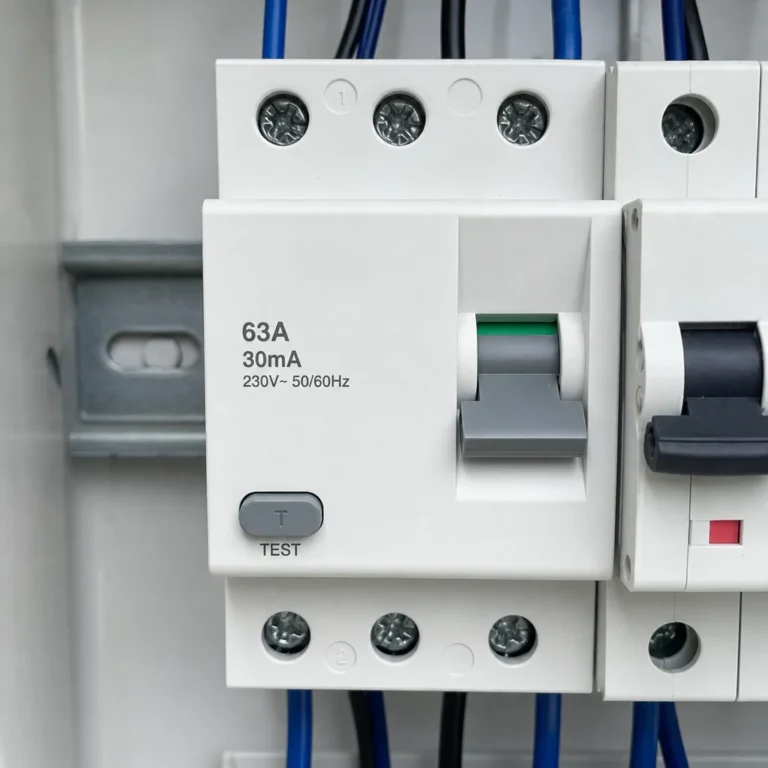
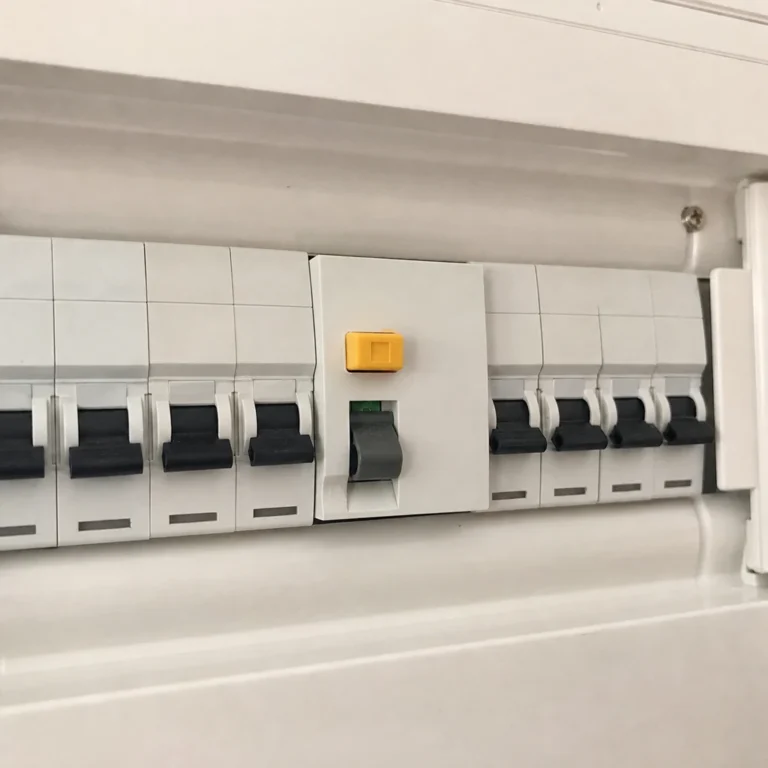
ELCB and RCCB are both safety switches — the device in your DB box that protects you and your family from electric shock. They detect the dangerous kind of electrical leak (current flowing to ground through a person, water, or a damaged cable) and cut the power in milliseconds, before serious harm is done.

In Singapore, the term “ELCB” is what most people (and most electricians) still say, even though the modern device is technically an RCCB. Same idea, newer name. The HDB 2nd RCCB requirement, the Singapore Standard, and our team all use both words — this page does too.

TRUST ELECTRICIANS installs, replaces, and tests ELCBs and RCCBs for HDB flats, condos, and landed houses across Singapore. Every job is done by a licensed electrician under LEW supervision, with the right sensitivity rating (30mA or 100mA) for your specific circuit.

✅ BCA Registered ✅ LEW-Certified ✅ EMA-Compliant ✅ HDB / Condo / Landed ✅ Same-Day or Next-Day Slots ✅ Licensed & Insured

What Is an ELCB / RCCB? (Earth Leakage Protection, In Plain English)

Imagine you are standing on a wet floor and you touch a kettle with a damaged cord. The current wants to flow from the live wire, through the kettle, through you, into the wet floor, and back to ground. A regular circuit breaker will not necessarily save you here — the current may not be high enough to trip it, but it is more than enough to kill you.

An ELCB / RCCB is the device that notices this. It constantly compares the current going out on the live wire with the current coming back on the neutral. If even a tiny imbalance (typically 30 milliamps) is detected, it trips in under 30 milliseconds — fast enough to prevent serious injury or death.
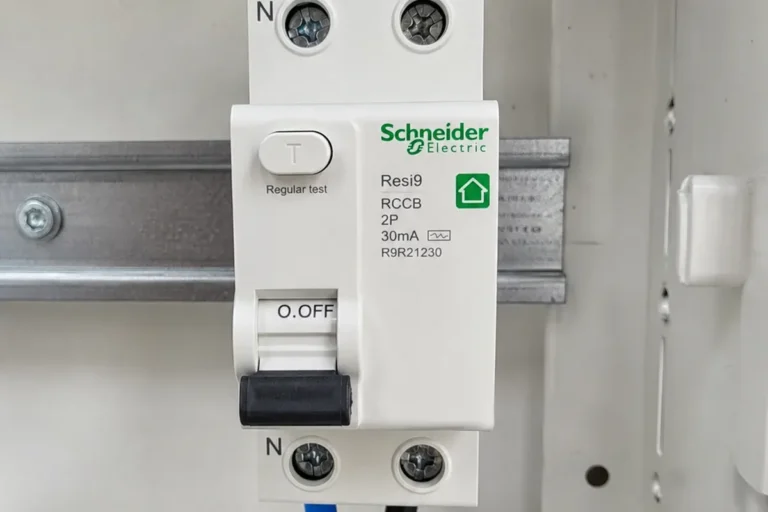
The 30mA sensitivity is the standard for personal protection in homes. The 100mA sensitivity is for property / fire protection — used on incoming mains or sub-distribution, where the device is meant to catch big leakage faults, not personal shock.

"Over 2500+ Water Heater Safely Install & Replace Across Singapore"

⭐⭐⭐⭐⭐ 4.9/5 Google Rating

ELCB vs RCCB vs RCBO – Which Do You Need?

These three terms get used interchangeably in Singapore, and it confuses everyone. Here is the clear breakdown:

  • ELCB (Earth Leakage Circuit Breaker) — the old name, still widely used in Singapore. Functionally equivalent to a modern RCCB.
  • RCCB (Residual Current Circuit Breaker) — the modern, technically correct name. Pure earth-leakage protection — no overcurrent protection. Always paired with an MCB on the same circuit.
  • RCBO (Residual Current Breaker with Overcurrent protection) — RCCB + MCB combined into one device. Saves space in the DB and provides both earth-leakage and overload protection in a single slot.

So which do you need?

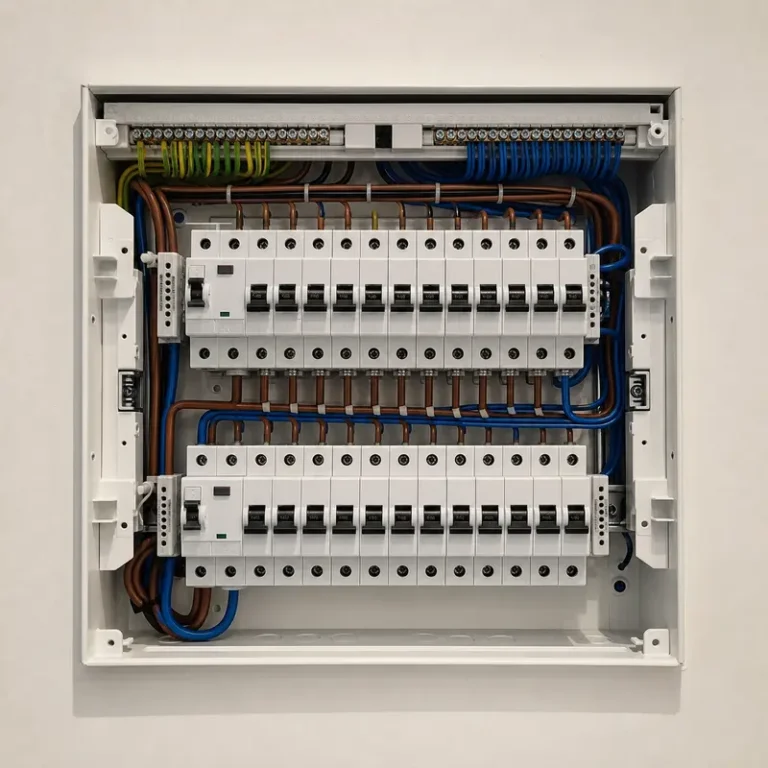
  • Most HDB socket and water-heater circuits should ideally be on a 30mA RCBO (combined protection, single device). Many older HDB installations use a 30mA RCCB + MCB combo — also fine, just takes more space in the DB.
  • Whole-house protection at the main switch is typically a 30mA or 100mA RCCB, depending on the installation. We can advise on site.
  • Sub-distribution (sub-DB feeding a sub-area) is often a 100mA RCCB for fire protection.
  • Lighting-only circuits generally do not need individual RCCB protection — they are protected by the main RCCB.

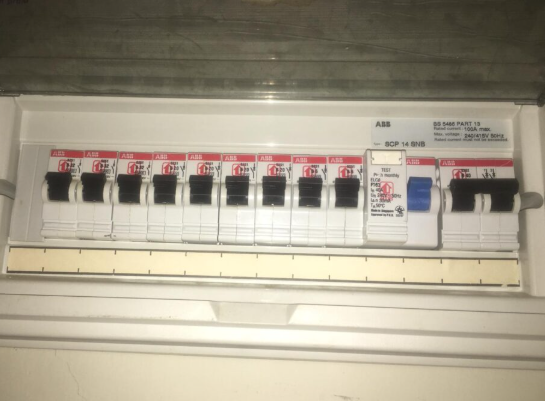
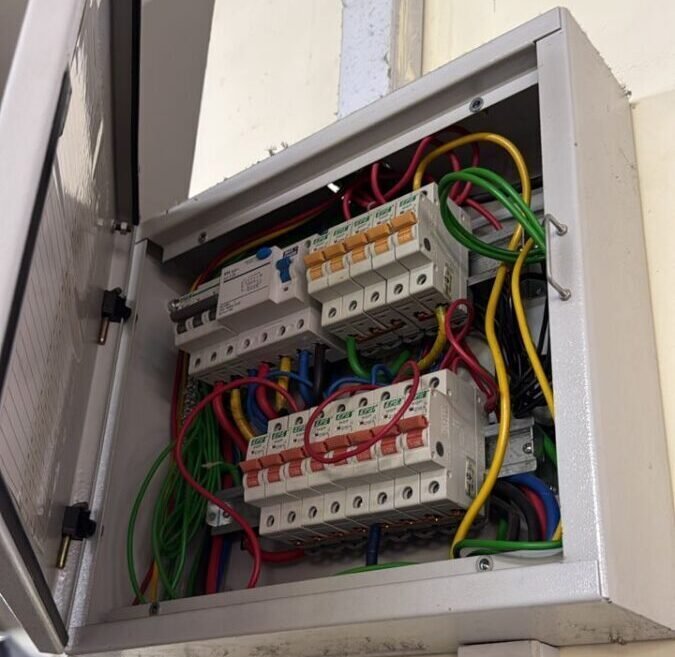
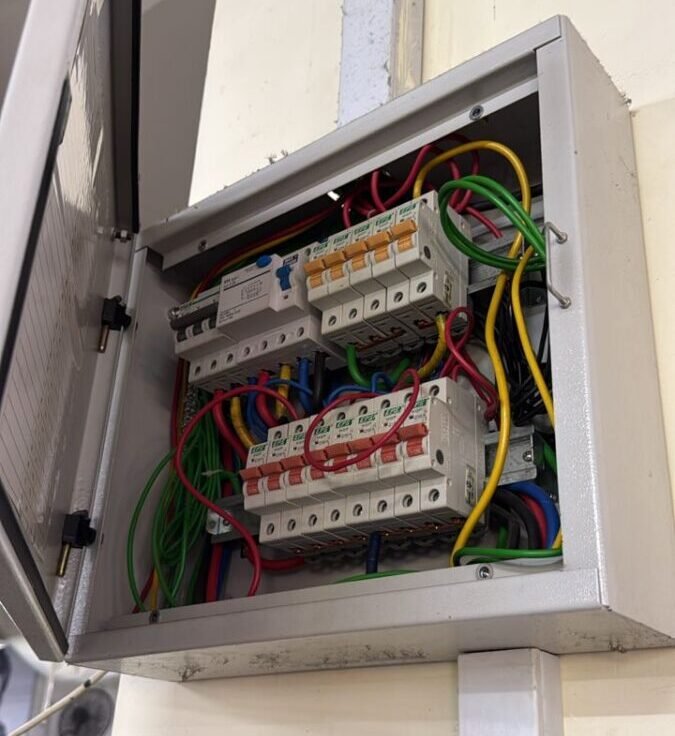
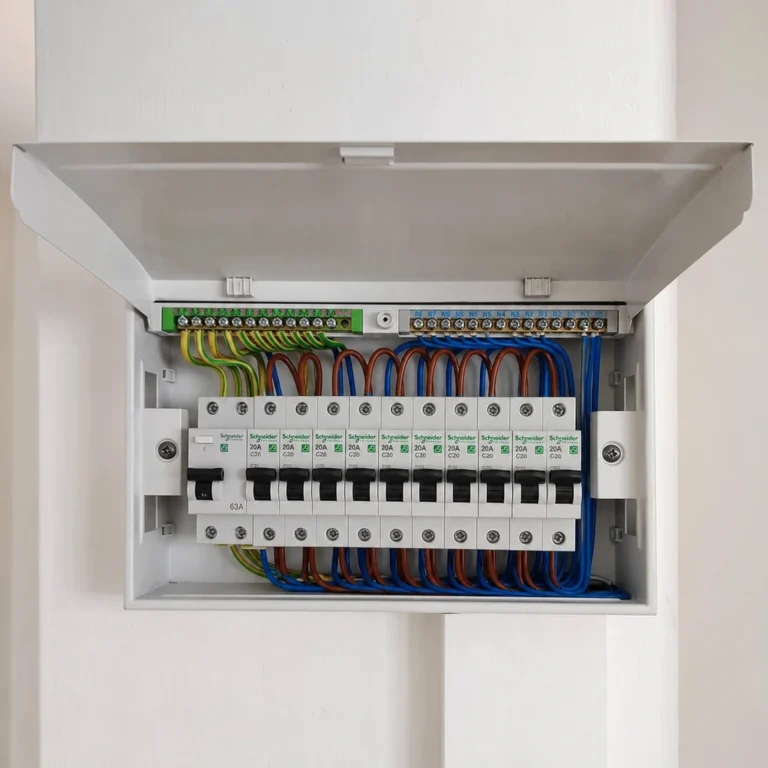
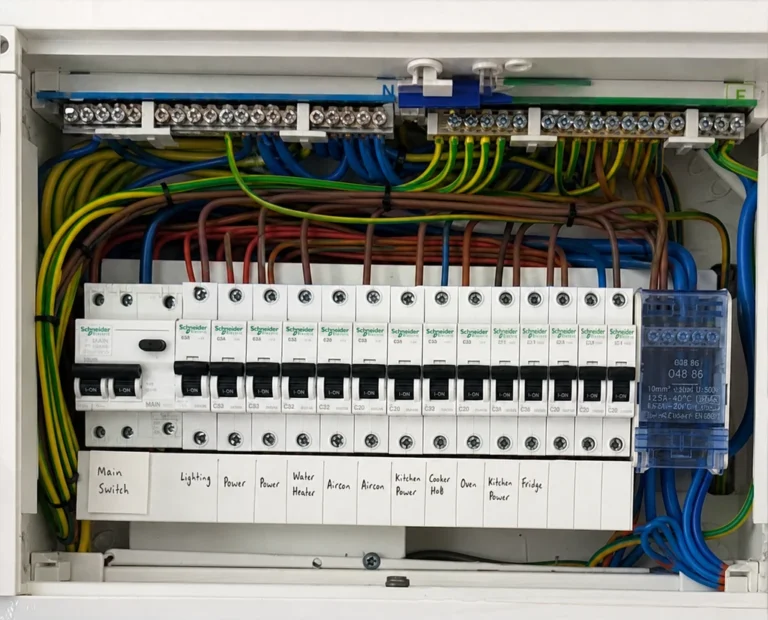
If you are not sure what is in your DB right now, send us a photo of the open DB and we will tell you within minutes.

HDB 2nd Circuit Breaker / RCCB Requirement (Compliance)

This is a big one, and it catches a lot of HDB homeowners off guard.

The rule: Since 2024, HDB requires that the socket circuit and the water-heater circuit in an HDB flat be protected by a dedicated RCCB (or RCBO) of 30mA sensitivity in addition to the main RCCB. This is sometimes referred to as the “HDB 2nd circuit breaker” or “HDB 2nd RCCB” requirement.

Why it matters:

  • The main RCCB protects the whole house. If it trips, everything goes dark and you cannot easily tell which circuit caused the fault.
  • The 2nd RCCB isolates the fault to the socket or water-heater circuit. If it trips, only those circuits lose power, and you can quickly identify and fix the issue.
  • It is required for HDB resale handovers, certain renovation works, and any new HDB electrical installation.

What it means in practice:

  • If your HDB flat was built or last rewired before the 2nd RCCB rule came in, you probably do not have one. We can add it as a standalone visit.
  • If you are doing a renovation, your ID should be specifying the 2nd RCCB in the electrical drawing. We will install it as part of the rewiring.
  • If you are selling or sub-selling your HDB flat, the buyer’s bank and HDB may ask for evidence of compliance.

Typical install: a 2-pole 40A 30mA RCBO in the existing DB, wired to the socket and water-heater circuits. Usually a 1–2 hour job, with a small LEW-signed CoC for the modification.

See also: DB Box Electrician Singapore for the wider DB-side context, and Water Heater Installation & Replacement Singapore for the water-heater side of the same story.

RCCB Rating for Home (30mA / 100mA, Sensitivity)

Choosing the right sensitivity matters. The wrong one either does not protect you, or trips constantly.

  • 30mA RCCB / RCBO — the standard for personal protection in homes. Used for socket circuits, water-heater circuits, and any circuit where a person could come into contact with a live part. This is what you want for the HDB 2nd RCCB, and for any indoor socket / water-heater circuit in condo or landed.
  • 100mA RCCB — for fire and equipment protection at the main switch or sub-DB. Catches bigger leakage faults that could cause fires, but is not sensitive enough for personal shock protection.
  • 300mA RCCB — for fire protection only, typically in commercial or industrial settings. Rare in residential.

The other choice is the current rating — 25A, 40A, 63A, 80A, 100A. This is the maximum current the device can carry without tripping on overload (the overcurrent job is still done by the MCB, but the RCCB itself has a current limit). The rating is matched to the circuit or the main incoming supply.

Rule of thumb: for the HDB 2nd RCCB, use a 40A 30mA RCBO. For the main RCCB on a typical HDB 63A incoming, use a 63A 30mA RCCB. We will confirm the right combination on site.

Signs Your ELCB/RCCB Is Faulty

A safety switch that does not work is worse than no safety switch at all, because you think you are protected when you are not. The good news: the test is a single button.

  • Press the “T” or “Test” button on the device monthly. It should trip immediately. If it does not, the device has failed and needs replacement. This is the single most important thing you can do for home electrical safety.
  • The RCCB will not stay in the “on” position after a trip** — usually a sign that the leakage fault is still present. The RCCB is doing its job. We need to find the leakage, not replace the RCCB.
  • The RCCB trips randomly with no obvious cause — could be a degrading RCCB, could be a real intermittent leakage (water ingress, damp wall, a failing appliance). We test both the device and the circuit.
  • The RCCB is warm to the touch — should never be. A warm RCCB means a poor internal connection. Treat as urgent.
  • The RCCB handle is loose, discoloured, or cracked — replace it. Do not wait.

If your RCCB fails the test-button check, the device has saved your life at least once already (or it was about to). Replace it.

Our ELCB / RCCB Service Process

  1. Photo of the open DB box — WhatsApp us a clear photo showing the existing RCCBs and RCBOs (or what you think they are). This lets us identify the brand, rating, and slot availability before we arrive.
  2. Phone triage — a few quick questions: which circuit is affected, is the test button working, when did the issue start. This helps us bring the right device.
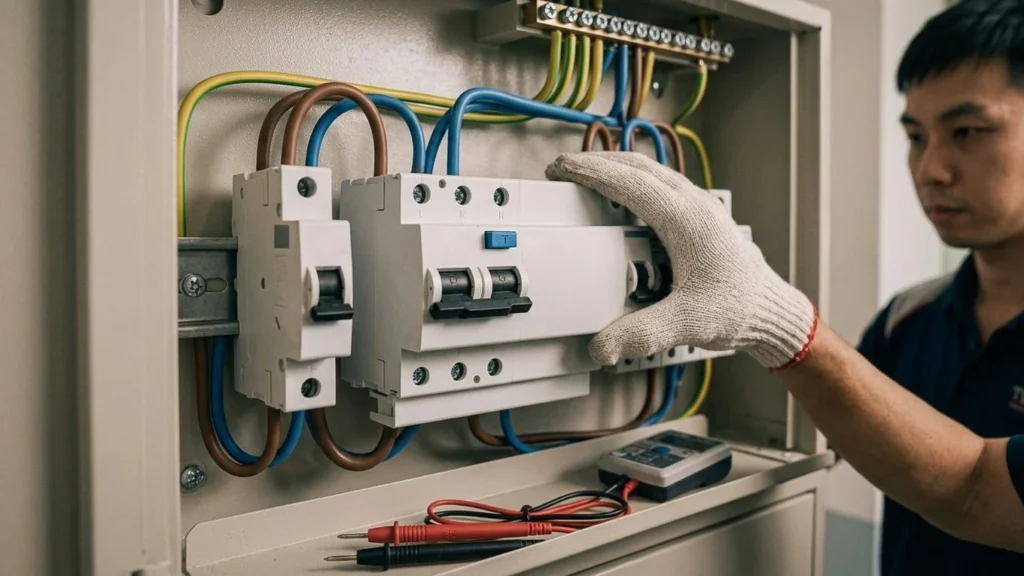
  3. Site visit — we test the existing RCCB with a multifunction tester, confirm whether the device or the circuit is at fault, and quote accordingly.
  4. Replacement or addition — for like-for-like swap, we do it on the spot. For a new 2nd RCCB (HDB compliance), we fit the new device, re-wire the relevant circuits, label clearly, and test.
  5. Test under realistic conditions — every new RCCB / RCBO is tested at the rated sensitivity, and we demonstrate the test button so you know what to do monthly.
  6. LEW sign-off + CoC — for any new RCCB / RCBO addition, a LEW endorsement and CoC is required. We issue this as part of the same visit.

Areas We Cover for ELCB / RCCB Work

Islandwide Singapore, no travel surcharge. We regularly attend electrical repair calls in Tampines, Bedok, Sengkang, Punggol, Yishun, Woodlands, Jurong West, Jurong East, Bukit Batok, Toa Payoh, Ang Mo Kio, Hougang, Serangoon, Bishan, Clementi, Queenstown, Choa Chu Kang, Bukit Panjang, Pasir Ris, Kallang, Geylang, Marine Parade, Bukit Merah, Bukit Timah, Holland Village, and the East Coast. For landed properties and private estates, we have the same islandwide footprint and response times.

Why Homeowners Trust Us for ELCB / RCCB Work

  • Licensed & LEW-endorsed — every meaningful job is signed off by a Licensed Electrical Worker registered with the EMA.
  • EMA-approved devices only — Schneider, ABB, Hager, Legrand, or equivalent. No unbranded substitutes.
  • HDB 2nd RCCB compliance specialists — we know the HDB rule, the right device (40A 30mA RCBO), and the LEW paperwork required.
  • Test before we replace — we will not sell you an RCCB you do not need.
  • Clean, polite, on-time — drop sheets, shoe covers, and a tidy site are the default.
  • Same-day or next-day slots for most RCCB jobs.

FAQs

Functionally, almost nothing in a Singapore home — both are earth-leakage safety switches that trip on residual current. “ELCB” is the older name still widely used; “RCCB” is the modern technically correct term. The device in your DB is most likely an RCCB, even if you call it an ELCB. The newer combined device is the RCBO (RCCB + MCB in one).

Since the 2024 HDB requirement, yes for the socket and water-heater circuits. A 30mA 40A RCBO on those circuits isolates faults faster, makes diagnosis easier, and is required for HDB resale handovers and most renovation sign-offs. If your flat does not have one, we can add it as a standalone job.

Monthly. Press the “T” or “Test” button. It should trip immediately. If it does not, replace the device — it has failed and you are not protected. This 5-second test once a month is the single highest-value electrical safety habit in any home.

No. RCCB replacement is fixed-wiring electrical work under Singapore law, and must be done by or under the supervision of a Licensed Electrical Worker. The DB busbar is always live. A mistake here is dangerous, and the work will not be CoC-signed.

It depends. If the RCCB trips with nothing plugged in, it could be either. If it trips only when a specific appliance is on, that appliance is the most likely culprit. We test both the device and the circuit before we replace anything, so you are not paying for an RCCB you did not need. If the trips are on a socket or water-heater circuit and the appliance checks out, the answer is often a power trip issue or a moisture ingress problem — and we handle that too.

Need an ELCB or RCCB Replaced, Added, or Tested Right Now?

If your safety switch will not trip when you press the test button, will not stay on after a trip, or you are an HDB homeowner who needs the 2024 2nd RCCB compliance — don’t wait. A failed safety switch means you and your family are not protected from electric shock.

Contact TRUST ELECTRICIANS Singapore, operated by AASHIKA NUR PTE. LTD., for fast, safe, and HDB-compliant ELCB / RCCB installation and replacement.