Ceiling Fan Not Spinning in Singapore? Causes and Safe Checks
If your ceiling fan is not spinning in Singapore, the problem could involve its remote control, wall controller, motor, internal electronics or electrical supply. A fan that hums without moving may have a different fault from one that remains completely silent. You can make a few safe observations before arranging a repair, but avoid opening the fan or attempting to fix its internal components yourself.
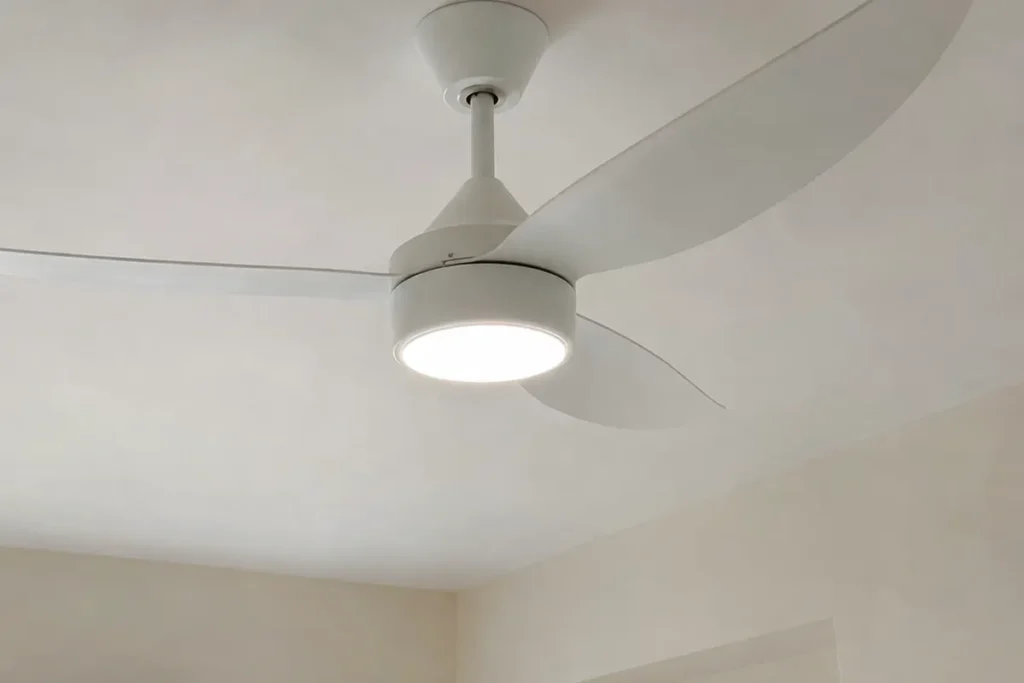
This issue can occur in HDB flats, condominiums and landed homes, particularly when an older fan begins behaving differently or a recently installed fan stops responding. Identifying exactly what happens when you switch it on can help an electrician narrow down the possible causes without replacing parts unnecessarily.
Why Is Your Ceiling Fan Not Working?
The first useful distinction is whether the fan receives power, makes a sound, responds to its controls or operates intermittently. None of these symptoms confirms a particular fault, but each provides useful information.
- The Fan Makes a Humming Sound but Does Not Spin
A ceiling fan that hums without rotating may have a failed capacitor, a motor or controller fault, or mechanical resistance preventing normal movement. The possible causes depend partly on the fan's design.
Some conventional AC ceiling fans use a capacitor as part of their motor operation. Electronic components in modern DC fans perform different control functions, so the same diagnosis does not apply to every model.
What you should do: Switch the fan off and stop using it. Do not push the blades to start the fan, even if they appear stationary. A humming motor can indicate an electrical or mechanical problem that needs proper inspection.
A qualified technician can examine the motor, controller and associated components to determine whether repair or replacement is appropriate.
- The Ceiling Fan Is Completely Silent
If the fan does not move or make any sound, the issue may be related to its controls or power supply rather than the motor alone.
Possible explanations include:
- A remote control with depleted batteries.
- A wall switch or fan controller that is not operating correctly.
- A problem with the electrical supply to the fan.
- A fault in the fan's receiver, electronic controller or motor.
Check whether the control was accidentally switched off or whether the remote display, if present, indicates that it is working. You can replace remote batteries according to the manufacturer's instructions without opening the fan.
If the controls appear normal but the fan remains unresponsive, professional fault-finding is the next sensible step.
- The Fan Light Works but the Fan Does Not
Some ceiling fans have an integrated light, while others have a separate light kit connected within the same fixture.
When the light works but the fan does not, it does not necessarily mean that the whole ceiling fitting has a problem. The light and motor may have separate controls or different electronic components.
Possible causes include a failed fan controller, a receiver issue, a motor fault or a problem affecting only the fan's electrical connection.
Take note of whether the light works normally, whether the fan responds to its remote, and whether the fault started suddenly or developed gradually. This information can help an electrician distinguish between a control problem and a possible internal component failure.
Do not remove the fan's canopy or access its wiring to investigate.
- The Fan Starts Slowly or Stops at Certain Speeds
A fan that starts inconsistently, runs more slowly than usual or stops at particular settings may have a controller, motor or mechanical problem.
For a remote-controlled fan, the symptom may also involve the control system. The correct diagnosis depends on the model and how the fault occurs.
Notice whether the fan:
- Starts only after several attempts.
- Stops after running for a short period.
- Responds differently at different speed settings.
- Makes an unusual sound before stopping.
Avoid repeated attempts to restart a fan that hums, overheats or stops unexpectedly. Continued operation may worsen an existing fault.
- The Fan Has Become Noisy, Unstable or Difficult to Start
Unusual noise, wobbling, scraping or movement around the mounting area can indicate a mechanical or mounting problem. Electrical faults may also cause abnormal operation.
These symptoms deserve attention because a ceiling fan is a suspended, rotating fixture. A fan that is visibly unstable should not be left running while you wait to see whether the problem improves.
Switch it off and keep clear if the mounting appears loose, the fan shakes excessively, or the casing becomes unusually hot.
What Can You Safely Check Before Calling an Electrician?
You do not need to dismantle the fan to provide useful information about the problem.
Step 1: Check the Normal Controls
Use the wall switch and remote control as intended by the manufacturer. Confirm that the correct control is selected and replace remote batteries if necessary.
Do not remove electrical covers or attempt to test switch terminals.
Step 2: Observe Whether Other Electrical Points Work
Check whether the room lights and other normal electrical points are operating. You can also note whether the issue affects just the fan or several fixtures.
These observations may help distinguish an individual fan fault from a wider electrical supply issue.
If a circuit breaker has tripped, do not repeatedly reset it. A recurring trip may indicate an underlying fault that needs professional assessment.
Step 3: Note the Symptoms
Before contacting an electrician, record:
- Whether the fan is silent, humming or stopping intermittently.
- Whether its light works independently.
- Whether the remote or wall controller responds.
- The fan's brand and model, if known.
- Whether the problem started after installation, renovation or another electrical issue.
A photograph taken safely from floor level can help identify the fan model and its general condition. Do not climb onto furniture to obtain one.
When Should You Stop Using the Fan?
Stop operating the fan and arrange professional assistance if you notice:
- A burning smell or smoke.
- Repeated sparking or unusual electrical noise.
- Excessive heat around the fan or its controls.
- Strong vibration, scraping or unstable mounting.
- A circuit breaker that trips when the fan is switched on.
If smoke or fire is present, move away from the danger and contact emergency services. Do not approach or touch a damaged electrical fitting.
Singapore's Energy Market Authority (EMA) advises consumers to engage appropriately licensed electrical workers for electrical work involving fixed wiring and other regulated electrical installations. You can read its guidance on engaging Licensed Electrical Workers.
Should You Repair or Replace a Faulty Ceiling Fan?
Repair may be suitable when the problem is isolated to a replaceable component, controller or remote receiver and suitable parts remain available.
Replacement may make more sense when the motor or several major components have failed, the fan is extensively damaged, or compatible replacement parts are difficult to obtain. An electrician can assess the mounting, electrical connections and condition of the fan before recommending a solution.
The age of the fan alone does not establish whether it needs replacement. The actual fault, repair cost, parts availability and safety of the installation all matter.
For homes in Singapore, TRUST ELECTRICIANS provides ceiling fan installation and repair services for HDB flats, condominiums and landed properties.
Frequently Asked Questions
Why is my ceiling fan humming but not spinning?
A humming sound without rotation may indicate a capacitor, motor, controller or mechanical problem. The cause depends on the fan design and requires inspection. Switch the fan off rather than trying to push the blades.
Why does my ceiling fan light work but the fan does not?
The fan motor and light may use different controls or components. A fault affecting the motor, receiver or fan controller can prevent rotation while the light continues working.
Can I push the ceiling fan blades to make them start?
No. Do not try to start a fan manually while it is energised. Switch it off and arrange an inspection if it hums or refuses to rotate.
Does a ceiling fan that stops after a few minutes need replacing?
Not necessarily. A controller, motor or other component may be responsible, and the symptom alone does not establish the cause. Have the fan assessed before deciding between repair and replacement.
Do I need a licensed electrician to repair a ceiling fan in Singapore?
Electrical work involving fixed wiring, lighting points or other regulated electrical components should be carried out by an appropriately licensed electrical worker. For a fault that goes beyond simple remote-battery replacement or normal user controls, arrange a professional assessment.
What information should I provide when requesting ceiling fan repair?
Describe the symptom, whether the light works, whether the fan makes a sound, and whether it uses a remote control. The brand and model are also useful. These details help the service provider understand the issue before an appointment.
Get Your Ceiling Fan Checked Safely
A ceiling fan that will not spin may have a simple control issue or a fault involving its motor, controller or electrical supply. Observing the symptoms is useful, but repeatedly switching the fan on, pushing its blades or opening electrical components is not a safe way to diagnose it.
For a persistent fault, arrange an assessment through TRUST ELECTRICIANS' ceiling fan repair and installation service. The appropriate repair can then be determined from the condition of the fan and its electrical connections.
For enquiries, call TRUST ELECTRICIANS on +65 8409 2646.
Trust Electricians
Need help with an electrical problem?
Talk to a BCA-registered, EMA-licensed electrical contractor. We explain what we find and quote before any work starts, for HDB, condo, landed and commercial properties across Singapore.