Power Socket Not Working in Singapore? Causes and Safe Checks
If one power socket in your Singapore home has stopped working while the other sockets still have electricity, the cause could be a faulty socket, a loose electrical connection, a problem with the wiring or an issue with the appliance itself. You can make a few simple observations to narrow down the possibilities, but a socket that shows signs of damage or remains without power should be checked by an appropriately licensed electrical worker.
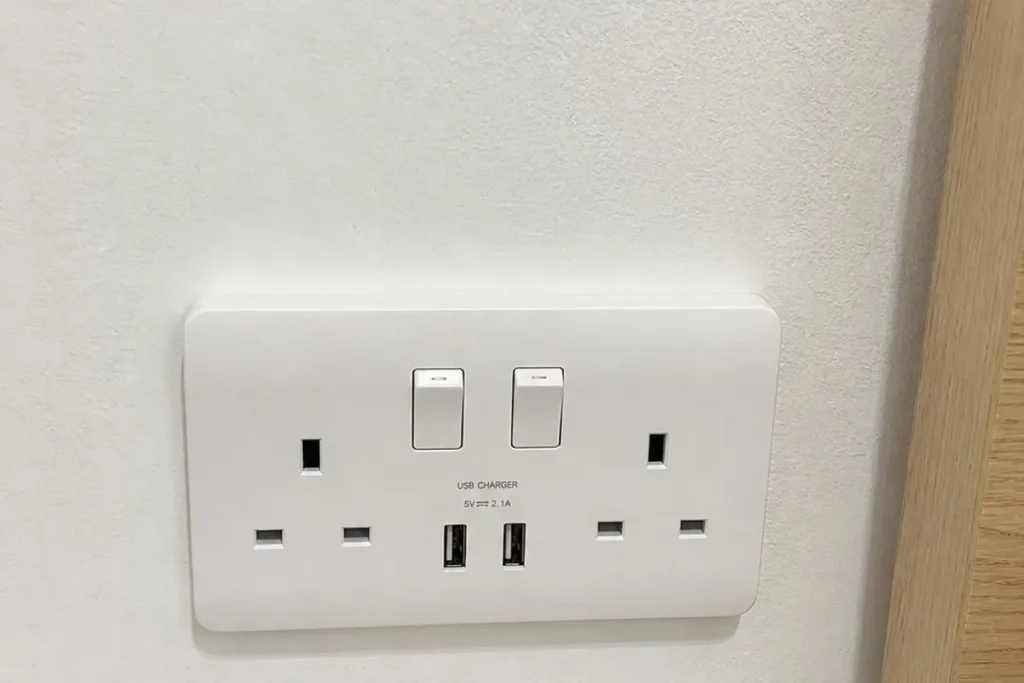
Why Has One Power Socket Suddenly Stopped Working?
You may notice the problem while charging your phone, plugging in a television or switching on an appliance in the kitchen. The socket worked normally yesterday, but today the device does not turn on.
Before assuming that the wall socket is broken, it is important to understand that the appliance, its plug and the electrical supply are separate parts of the system.
For example, if your phone charger also fails at another working socket, the charger itself may be the problem. If the charger works elsewhere but the original power point remains dead, the problem may be associated with that socket or its electrical circuit.
Neither observation proves the exact cause, but it helps narrow down what needs to be investigated.
The first question to answer is whether only one socket has stopped working or several electrical points have lost power at the same time.
5 Possible Reasons Your Power Socket Is Not Working
- The Appliance or Plug Has a Fault
Sometimes, a socket appears to have failed when the problem actually lies with the connected equipment.
An appliance may have an internal fault, a damaged power cable or a faulty plug. In some cases, a plug fuse may also have failed.
If the appliance does not work, check whether it operates normally from another known-working socket, provided its plug and cable appear safe and undamaged.
If the appliance works elsewhere, that is useful information for the electrician investigating the original power point.
However, do not transfer an appliance to another socket if its plug, cable or casing is damaged, wet or unusually hot.
- The Circuit Breaker Has Tripped
A power socket may stop working because the circuit supplying it has lost power.
In an HDB flat, the electrical distribution board (DB box) contains protective devices that control and protect the home's electrical circuits. Depending on the installation, a tripped miniature circuit breaker (MCB) may affect one circuit, while a tripped RCCB may interrupt the supply to a larger part of the home.
Look at the situation around the home:
- Has only one socket stopped working?
- Are several sockets in the same room affected?
- Have the lights or other electrical points also stopped working?
- Has the electricity supply to the whole flat been interrupted?
These observations can help distinguish a local socket problem from a wider circuit issue.
If a breaker is visibly tripped, there are no signs of electrical damage and the equipment is safe to approach, you may follow the normal operating instructions for the accessible breaker and attempt a single reset. If it trips again, stop. Do not keep resetting it to restore power.
For repeated tripping, our Power Trip Electrician Singapore service is relevant to the problem.
- The Socket Outlet Has Worn Out
A power socket is used repeatedly over many years. The mechanical parts and electrical contacts inside the fitting can deteriorate with age and use.
Possible symptoms include a plug that no longer fits securely, intermittent power or a socket that has stopped working altogether.
A worn socket should not be treated as a minor inconvenience. Poor electrical contact can create additional problems, particularly if the fitting becomes hot or shows visible damage.
Do not bend the plug pins, insert objects into the socket, force a loose plug to stay in place or remove the socket's faceplate to investigate.
If you suspect that the socket itself has failed, arrange an inspection by a licensed electrical worker.
- A Loose Connection or Wiring Fault
The problem may be behind the socket rather than in the visible plastic fitting.
An electrical connection can deteriorate, and wiring can become damaged. Depending on the fault, the socket may stop working even though the breaker has not tripped.
This is one reason why replacing the visible socket alone may not always resolve the problem.
A qualified professional can inspect the affected point, test the circuit and determine whether the repair involves the socket outlet, its connections or the wiring supplying it.
This is especially important if the socket has become unreliable over time or stopped working after electrical or renovation work.
Do not remove the faceplate or attempt to tighten the internal terminals yourself.
- More Than One Socket Has Lost Power
If several sockets have stopped working at the same time, the problem may be connected to a shared circuit or a protective device.
For example, multiple outlets supplied by the same affected circuit could lose power together. A trip at the distribution board may also explain why several electrical points are unavailable.
However, the number of affected sockets does not establish the cause by itself.
If you can safely observe the situation, note which rooms and electrical points are affected. This information can help the electrician identify the relevant circuit more efficiently.
If the whole flat has lost electricity, check whether neighbouring units are also affected. A wider supply interruption may need to be reported to the relevant electricity supply operator rather than treated as a single faulty socket.
What Can You Safely Check Before Calling an Electrician?
You do not need to dismantle anything to collect useful information about a dead socket.
Check Whether the Appliance Works Elsewhere
If the appliance and plug are visibly undamaged, and there is no sign of overheating or moisture, check whether the same appliance works from another known-working socket.
If it does not work elsewhere either, the appliance or plug may be responsible.
If it works elsewhere, the original power point or its electrical supply may need inspection.
This is a simple observation, not a definitive electrical test.
Find Out Whether the Problem Affects One Socket or Several
Check whether other electrical points in the home are still working normally.
If only one socket is affected, the fault may be local to that point. If several outlets have lost power, the issue may involve the circuit supplying them.
Avoid testing a socket that has visible damage, feels unusually hot, has produced sparks or smells burnt. Do not plug another appliance into a suspect outlet to investigate these warning signs.
Look at the DB Box Without Opening It
If it is safe to approach the distribution board, you can look at the external position of the breaker switches.
Do not remove the cover, touch internal components or attempt to identify a fault by inspecting exposed wiring.
If a switch is visibly tripped, there is no sign of damage and the area is dry, a single reset following the normal operating instructions may help establish whether the problem persists. Stop immediately if the breaker trips again.
If you are uncertain which switch is involved, leave it alone and arrange professional assistance.
Take Note of What Happened Before the Socket Failed
A few details can help an electrician understand the problem:
- Which room contains the affected socket?
- Did the socket stop working suddenly or become unreliable over time?
- Was a particular appliance connected when it happened?
- Are other sockets in the same room still working?
- Has the breaker tripped, or have you noticed a burning smell, unusual heat or visible damage?
You can take a photograph of the outside of the fitting, provided it is safe to do so. Do not remove covers or expose wiring to obtain a photograph.
Signs You Should Never Ignore
A power socket that simply stops supplying electricity requires attention, but certain symptoms call for greater urgency.
Stop using the affected socket and keep away if you notice:
- A burning or melted-plastic smell.
- Black or brown marks around the outlet.
- Cracked, melted or visibly damaged plastic.
- Unusual heat at the socket or plug.
- Persistent buzzing, crackling or sparking.
- Evidence of water around the electrical fitting.
These signs may indicate overheating or another electrical fault. Do not continue plugging in appliances to test whether the outlet works.
If smoke, active sparking or a fire is present, move away and contact emergency services. Do not touch the fitting or attempt to handle exposed electrical components.
A socket that still supplies power is not necessarily safe. Equally, a socket that has stopped working is not necessarily defective. The actual condition must be established through appropriate inspection and testing.
Should You Repair or Replace the Power Socket?
The correct solution depends on what has failed.
If the appliance or plug is faulty, replacing the wall socket may be unnecessary.
If the socket outlet has deteriorated, replacement may be appropriate. If the problem involves the wiring or a connection behind the fitting, further electrical work may be required.
If the circuit breaker has tripped, the cause must be understood before deciding whether any component needs replacement.
This distinction matters because a repair based on guesswork can leave the underlying issue unresolved.
In Singapore, HDB's electrical maintenance guidance states that socket outlet replacement should be carried out by a licensed electrician. EMA also identifies the replacement, extension or addition of electrical power points as work for an appropriately licensed electrical worker.
For help diagnosing a defective outlet or electrical connection, see our Electrical Wiring Repair Singapore service.
If your actual requirement is to add a new socket rather than repair an existing one, our Power Point Socket Installation Singapore service is the more relevant option.
What If You Need More Power Points at Home?
Sometimes, a homeowner discovers that a socket is not working when the real problem is a lack of convenient outlets.
For example, you may need additional power points after rearranging furniture, setting up a home office or renovating a room.
Adding a new socket is different from repairing an existing one. The proposed location, circuit arrangement and electrical load need to be considered before installation.
Avoid using multiple adaptors or extension leads as a permanent substitute for properly planned electrical points. Overloading outlets or using damaged accessories can introduce additional hazards.
A licensed electrical worker can assess the installation and advise on a suitable solution for the property.
Frequently Asked Questions
Why is only one power socket not working in my Singapore home?
A single dead socket may be caused by a faulty outlet, a loose electrical connection, a wiring fault or a problem with the connected appliance or plug. If other sockets work normally, that helps narrow the possibilities, but an inspection may still be necessary to confirm the cause.
Can I replace a power socket myself in Singapore?
You should not dismantle or replace the socket yourself. HDB advises engaging a licensed electrician for socket outlet replacement, and EMA provides guidance on the electrical work that requires a Licensed Electrical Worker. Use an appropriately licensed professional for the repair.
What if the socket has no power but the circuit breaker has not tripped?
A breaker that appears normal does not rule out an electrical fault. The problem could be local to the socket, its connection or the wiring supplying it. Avoid opening the fitting and arrange a professional inspection if the outlet remains dead.
Is it safe to use an extension cord when a socket stops working?
An extension cord should not be used to bypass a socket that shows signs of damage, overheating or another electrical fault. Even when another outlet appears normal, avoid overloading it or treating an extension lead as a permanent solution. Have the original problem checked.
Does a power socket need to be replaced if it stops working?
Not always. The cause could be the appliance, the circuit or the wiring rather than the socket itself. A proper diagnosis helps determine whether the outlet needs replacement or another repair is required.
Who should I contact if my socket smells burnt or produces sparks?
Stop using the socket and keep away from it. Do not attempt to remove the cover or test it with another appliance. Arrange urgent professional electrical assistance. If there is smoke, fire or immediate danger, contact emergency services.
Get Your Faulty Power Socket Checked Properly
When a power socket stops working, the goal should not simply be to get electricity back at any cost. The important step is to establish why the outlet failed and whether the cause involves the appliance, the socket, the wiring or the circuit supplying it.
Noting which socket is affected, whether other electrical points are working and whether any warning signs are present can make the initial assessment more useful.
TRUST ELECTRICIANS provides electrical troubleshooting and repair services for homes and other properties across Singapore. The appropriate repair depends on the condition of the installation and the findings of the inspection.
For enquiries, call TRUST ELECTRICIANS on +65 8409 2646.
Trust Electricians
Need help with an electrical problem?
Talk to a BCA-registered, EMA-licensed electrical contractor. We explain what we find and quote before any work starts, for HDB, condo, landed and commercial properties across Singapore.