Singapore Plug and Socket Types: Type G, 3-Pin and Compatibility
Singapore commonly uses the 13A three-pin fused Type G plug for household electrical appliances. However, not every international plug is suitable for Singapore sockets, and a plug that physically fits does not automatically guarantee a safe electrical connection.
This guide explains common electrical plug types in Singapore, the purpose of different current ratings and the compatibility issues to check before using an appliance. It also explains when a damaged or unsuitable socket should be inspected by a qualified professional.
What Is the Standard Plug Type in Singapore?
The 13-ampere (13A) three-pin fused plug, commonly known as Type G, is suitable for most electrical appliances in Singapore. It has three rectangular pins designed for live, neutral and earth connections, along with a fuse incorporated into the plug.
The earth connection provides an important layer of protection for appliances designed to use earthing, particularly those with exposed metal bodies. The fuse also forms part of the plug's electrical protection system.
When purchasing an appliance, check the plug type, product specifications and required safety markings. Singapore's Consumer Product Safety Office identifies 13A and 15A mains plugs as controlled goods that must carry the required SAFETY Mark.
For more information, see the official guide: Types of Mains Plugs Suitable for Use in Singapore.
Common Electrical Plug Types Found in Singapore
Different appliances may use different plug designs depending on their electrical requirements and safety features. The following are some common plug types and compatibility considerations.
1. Type G: 13A Three-Pin Plug
The Type G plug is the familiar rectangular three-pin design used for most household appliances in Singapore.
Its key features include:
- Three rectangular pins for live, neutral and earth connections.
- A built-in fuse as part of the plug's protection system.
- Compatibility with suitable Singapore Type G socket outlets.
Always use a properly rated, approved plug and socket combination. Never bypass the fuse or replace it with an arbitrary rating.
2. Type M: 15A Three-Round-Pin Plug
A 15A three-round-pin plug, commonly referred to as Type M, is used for certain higher-current appliances, including some air-conditioning equipment.
These appliances may require a dedicated connection and a compatible 15A socket outlet. The correct arrangement depends on the appliance manufacturer's specifications and the electrical installation.
According to Singapore's Consumer Product Safety Office, the installation of 15A Type M socket outlets should be carried out by qualified electrical workers.
Do not assume that a standard 13A outlet or an improvised adaptor can safely serve an appliance that requires a 15A connection.
3. Type C: 2.5A Two-Round-Pin Plug
Some low-power appliances use a two-round-pin plug with suitable built-in safety features, such as double insulation.
These appliances do not rely on an earth connection when their protection design does not require one. A suitable approved adaptor may be needed to connect the plug to a compatible Singapore socket outlet.
Never force a two-pin plug into an incompatible outlet or alter its pins to make it fit.
4. Schuko Plugs: 10A or 16A
Schuko-style plugs are commonly associated with appliances designed for certain European markets. They typically have round pins and side earthing contacts.
Singapore's Consumer Product Safety Office warns that 10A/16A Schuko plugs are not suitable for use with local socket outlets. Their pin dimensions can place stress on socket contacts, potentially causing poor contact and overheating. Their earthing arrangement may also fail to connect correctly to the local socket's earth contact.
Do not use an unsuitable Schuko plug simply because an adaptor or universal-looking socket appears to accept it. Check the official safety guidance before connecting imported appliances.
What Do 10A, 13A, 15A and 16A Mean?
The letter A stands for ampere, the unit used to measure electric current. A plug's current rating indicates part of its intended electrical capacity, but it does not determine whether the entire connection is safe.
The plug, fuse, socket outlet, cable, protective devices and electrical circuit must all be appropriate for the appliance and its intended use.
For example, a higher-rated plug does not automatically make an ordinary socket or circuit suitable for a higher-current appliance. Likewise, using a lower-rated connection for equipment that requires a different supply arrangement can create overheating and other safety hazards.
Before purchasing or connecting an appliance, check its input specifications and the manufacturer's installation requirements. If a dedicated or higher-current connection is needed, consult a qualified electrical professional.
Understanding a 3-Pin Plug Layout and Colour Codes
A three-pin plug is designed to provide live, neutral and, where required by the appliance's protection design, earth connections. Product diagrams may show pin positions, terminal labels and wire-colour information.
However, plug-terminal diagrams should not be treated as universal instructions for every appliance. Electrical cord colours, plug layouts and fixed building wiring are not interchangeable concepts.
A colour label alone cannot establish whether a wire is correctly connected or safe to touch. Older installations, different appliance designs and previous modifications may introduce additional complications.
For electrical safety:
- Follow the appliance manufacturer's documentation.
- Do not open a plug or socket to investigate wiring unless the work is being handled by a competent and appropriately qualified person.
- Never touch exposed conductors or rely on wire colours alone to identify a safe connection.
- Stop using any plug or cable that appears damaged, discoloured or overheated.
For official guidance on electrical work in Singapore, refer to the Energy Market Authority's Engaging Licensed Electrical Workers page.
Are Universal Power Sockets Safe for Every Plug?
No. A universal power socket is not automatically compatible with every international plug design.
Physical compatibility is only one consideration. The connection must also provide appropriate contact pressure, current capacity, earthing and electrical protection. Some plug designs are unsuitable for Singapore socket outlets even when an adaptor or multi-standard socket appears to accept them.
Before using an imported appliance, check its plug type, input voltage, frequency requirements and manufacturer's instructions. A plug adaptor changes the physical connection shape; it does not normally convert the supply voltage.
If the appliance requires a different electrical connection, seek professional advice rather than modifying the plug or relying on an improvised adaptor.
For a broader explanation of local electrical supply requirements, read our guide to Singapore Voltage and Electrical Standards.
Plug and Socket Dimensions: What Should You Check?
There is no single set of dimensions that applies to every international plug and socket type.
The shape and spacing of the pins, contact design, insertion depth, current rating and earthing arrangement all influence compatibility. A socket that accepts a particular plug shape may still be unsuitable for that plug's electrical requirements.
When checking plug types or comparing product specifications:
- Confirm the exact plug standard specified by the manufacturer.
- Verify that the socket outlet is designed for the corresponding plug and electrical rating.
- Check the appliance's input requirements and any applicable product safety markings.
- Never bend, file or force pins to fit an incompatible socket.
If you are unsure which socket is appropriate for an appliance, have the requirements checked before use.
When Should a Power Socket Be Replaced or Inspected?
A socket outlet should be investigated if it is cracked, loose, unusually hot, scorched or producing buzzing sounds or a burning smell.
These symptoms may indicate a damaged connection or another electrical fault. Stop using the affected outlet and arrange a professional inspection. If there is smoke, fire or an immediate electrical hazard, keep away from the affected area and contact the appropriate emergency service.
Do not remove a socket faceplate or attempt to investigate exposed wiring yourself.
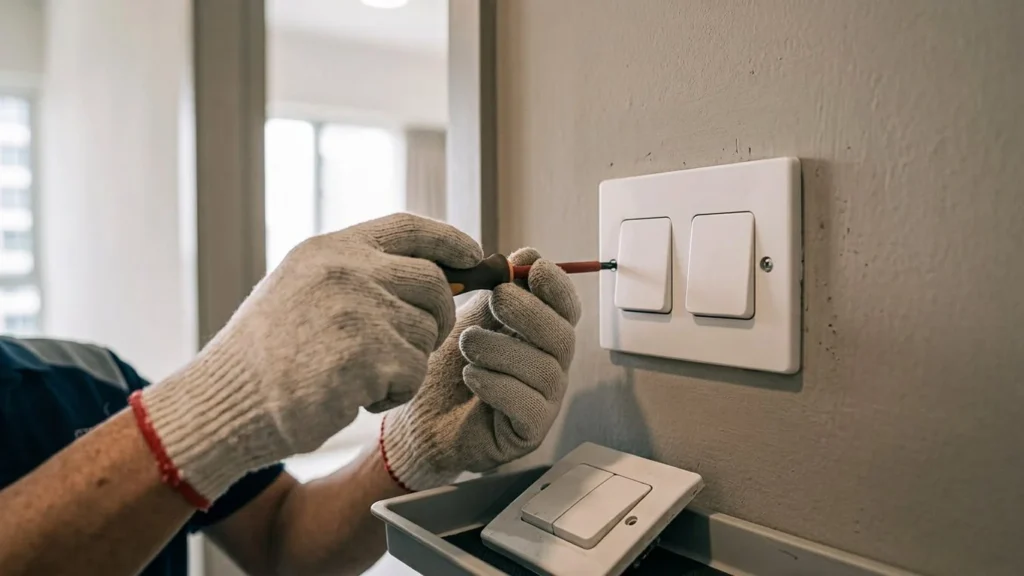
TRUST ELECTRICIANS provides a dedicated service page for Power Point & Socket Installation / Repair. For work involving a combined switch and socket arrangement, you can also review our Light Switch Installation & Replacement service.
Singapore's Energy Market Authority advises consumers to engage an appropriately licensed electrical worker for relevant electrical installation, repair, replacement and modification work.
Frequently Asked Questions
What is the standard plug type in Singapore?
The 13A three-pin fused Type G plug is suitable for most common mains-powered appliances in Singapore. Certain higher-current appliances may require a different specified connection, such as a 15A Type M plug and compatible socket outlet.
Can I use a 16A Schuko plug in Singapore?
Do not assume that it is suitable. Singapore's Consumer Product Safety Office warns that 10A/16A Schuko-style plugs are not suitable for local socket outlets because of potential contact and earthing problems. Confirm the correct connection with the appliance supplier or a qualified professional.
Does a plug adaptor convert 230V electricity to another voltage?
No. A standard plug adaptor changes the connection shape but does not normally change the supply voltage or frequency. Check the appliance's input label and manufacturer's instructions to determine whether a suitable voltage converter is required.
What does the 13A rating on a plug mean?
The 13A rating identifies the plug's intended current rating. It does not mean that every appliance, socket outlet or electrical circuit can safely operate at 13A. The complete connection must meet the appliance's electrical requirements.
Can I change a plug or socket myself?
Do not attempt live electrical work or make wiring decisions based only on colour codes. Singapore's Energy Market Authority advises consumers to engage a Licensed Electrical Worker (LEW) for relevant electrical installation work, including the addition, extension, replacement or modification of power points and wiring.
Are universal power sockets suitable for all international appliances?
No. A universal-looking socket does not guarantee that every plug type will connect safely. Plug geometry, electrical ratings, earthing and product approval must all be considered before use.
Choose the Right Plug and Socket for Electrical Safety
Choosing the correct plug and socket involves more than finding a connection that fits. Always check the appliance's specifications, plug rating, required safety markings and compatibility with the electrical installation.
If an outlet is damaged, an imported appliance requires a different connection or you are unsure about socket compatibility, seek professional advice rather than modifying electrical components yourself.
For professional assistance with socket installation, replacement or repair, visit our Power Point & Socket Installation / Repair service page.
For enquiries, call TRUST ELECTRICIANS on +65 8409 2646.
You can also read our related guide: Singapore Voltage Explained: Home Electrical Standards and Safety.
Official sources
- Consumer Product Safety Office: Types of Mains Plugs Suitable for Use in Singapore
- Energy Market Authority (EMA): Engaging Licensed Electrical Workers
- Energy Market Authority (EMA): Electrical Safety
Guides are written for general information and checked against the official sources above. Electrical work on fixed installations in Singapore must be carried out by a licensed electrical worker.
Trust Electricians
Need help with an electrical problem?
Talk to a BCA-registered, EMA-licensed electrical contractor. We explain what we find and quote before any work starts, for HDB, condo, landed and commercial properties across Singapore.